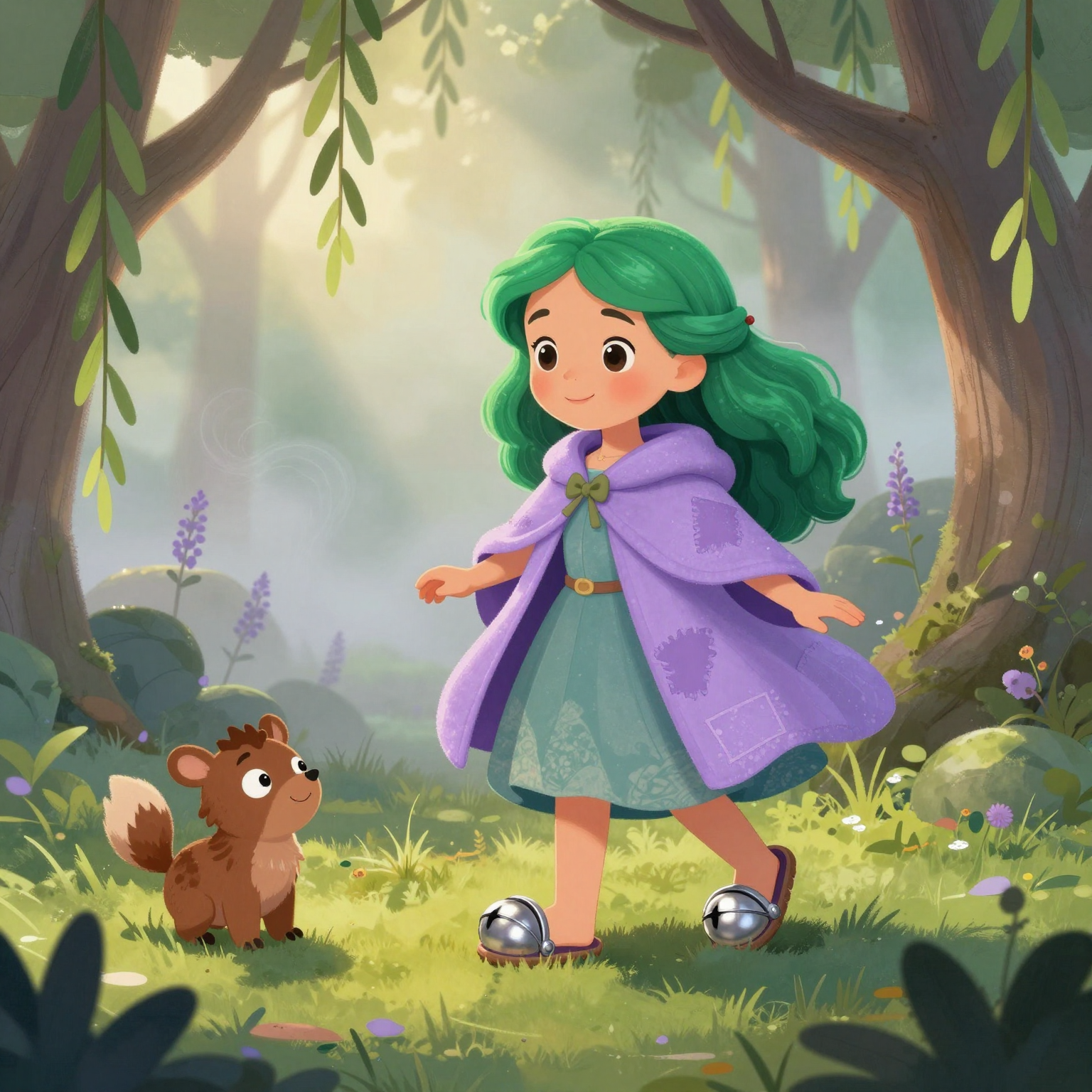
The morning in Willowbell Wood crackled and hummed with a scent: sweet, peppery snapdragon mist. Beneath silvery dew-dusted leaves, soft earth pressed cool and crumbly under slippered feet. Princess Lira tiptoed, her toes peeking from slippers with bells that tinkled—chime, chime—at every step, which she did in secret zigzag patterns, as if painting invisible stripes on the moss.
Past twisting trunks, a shy sound joined the music: "Pip... pip... pip." It was Pipkin, the new squirrel-child, tail flicking in nervous little twitches as he arranged acorn caps in perfect rows. His fur was the color of rain-wet wood, and his quirk was counting each cap twice, ears wiggling with the numbers. "Three... three... four... four..." he whispered, almost hidden behind a fern.
Lira dipped in a tiny curtsy, bells giggling. She always greeted new friends with a twirl, her cloak swirling lavender in the mist. “Good sunrise, Pipkin! Care for a slipper-stride beside me?”
Through the dappled light and spicy air, their steps joined—a tinkling and a counting, weaving a quiet melody between the trees. And just beyond, something magical waited, humming softly, almost ready to be found.
They tiptoed and padded, following the way the moss squished coolly beneath their feet and the wind whistled a thin, wavy tune. Lira’s slippers jingled with each zig, while Pipkin counted his acorn caps in a pocket, voice barely louder than the chirps of beetles.
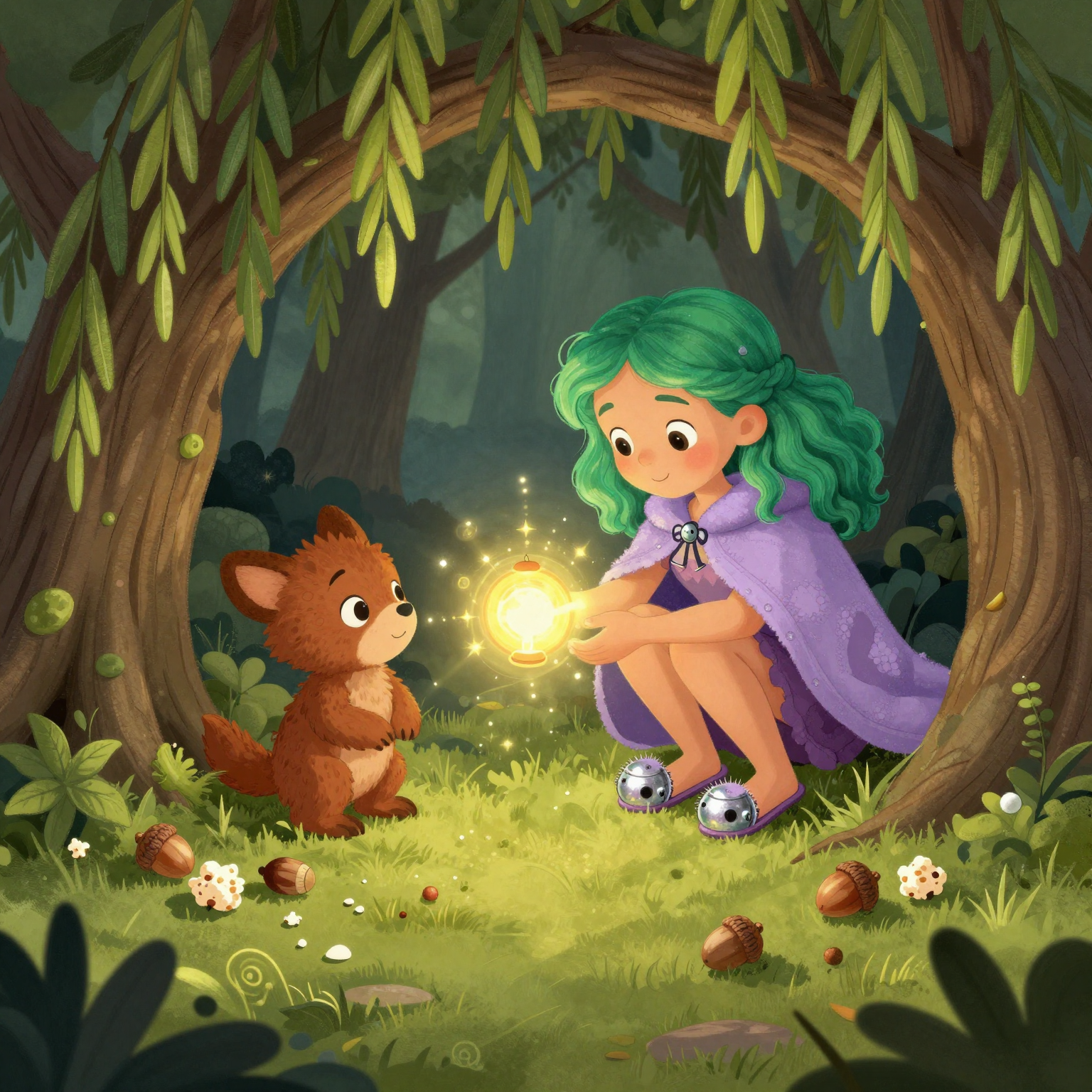
Suddenly, a hollow beneath the grandest willow yawned open. Lira peeked in, nose tickled by the earthy smell of old rain and root. Deep inside, a faint shimmer—like the glimmer on a bubble—swirled. Pipkin’s whiskers twitched.
Then—echo! A voice that wasn’t quite theirs called out, “Slippers, slippers, slippers—turn to silly slippers!” Instantly, Lira’s shoes puffed up, sprouting fuzzy purple pom-poms, bouncing with every wiggle. Pipkin’s eyes widened, tail stiff as a stick. He whispered, “I wish for acorns, acorns, acorns!” The echo replied, “Acorns, acorns, acorns—turn to popcorn acorns!” Suddenly, his acorns popped and tumbled out, crunchy and salty-sweet, smelling like roasted chestnuts.
Lira clapped, bells jingling, and grinned, “The Echo Cup! It turns wishes a wee bit upside-down. Shall we play?” And so, the playful contest began, with the echo’s magic twisting every wish in wobbly ways.
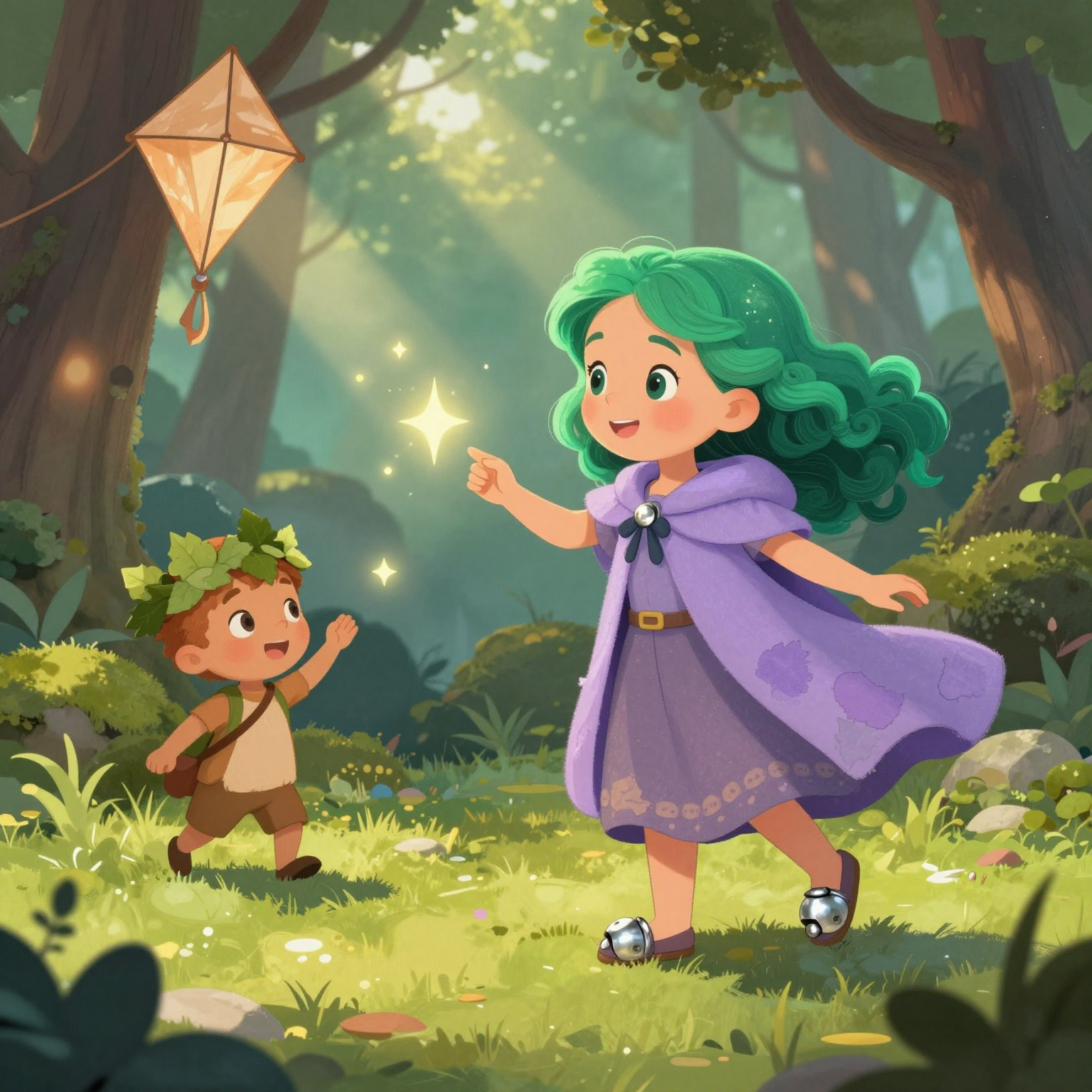
Lira drew a circle in the moss—“The Echo Cup Contest!” she declared, bells shivering. Rules: wish aloud, three times, and see what the echo makes! Pipkin nibbled his popcorn acorn, wriggling ears, and nodded. A hush, then Lira pranced to the center, twirling her cloak just so.
“I wish for a kite—a kite—a kite!” she sang. The echo replied, “Kite, kite, kite—turn to a bite!” A breeze swooshed, and a fluffy bread-kite flopped down, smelling of warm honey, with its string a licorice lace. Pipkin giggled, clutching his whiskers.
His turn. He whispered, “I wish for a crown—a crown—a crown.” The echo echoed, “Crown, crown, crown—turn to brown!” and a crown of crunchy brown leaves tumbled atop his head, twigs tickling his ears.
Wish after wish tumbled out—frizzy frogs (that turned to fizzy logs), candy canes (that turned to sandy lanes), and each time, Lira’s slippers danced in new loops: zig, zag, zip, zap. The contest swelled with giggles and squishy surprises, until something odd—Pipkin stopped, clutching his chest, his voice nearly lost beneath the echo’s silly roar.
As the laughter quieted, Lira noticed Pipkin’s paws twisting anxiously. He had not wished again. “My wishes get all twisty,” Pipkin murmured, voice softer than the rustle of shivering grass. He shuffled the leaf crown, eyes peeking out like hidden jewels.
Lira knelt beside him, slippers chiming. She whispered, “The echo loves all voices—even the tiniest ones. Want to try again? I’ll do my slipper-ziggle while you wish.” She twitched her toes just so, making the bells ring a tiny, brave tune: chime-chime, chime-chime.
Encouraged, Pipkin breathed deep, tail curled like a question mark. “I wish for a friend—a friend—a friend,” he barely breathed. The echo danced, but this time it sang: “Friend, friend, friend—turn to lend!” Suddenly, the moss between them shimmered, and a basket appeared, full of things to share—shiny stones, berry tarts, little wooden spoons.
Pipkin blinked, then smiled. Lira leaned close, repeating her refrain, “Zig, zag, chime-chime—every wish has its time!” And in the hush, a new wish rippled: the wish to be heard, even if your voice is small.
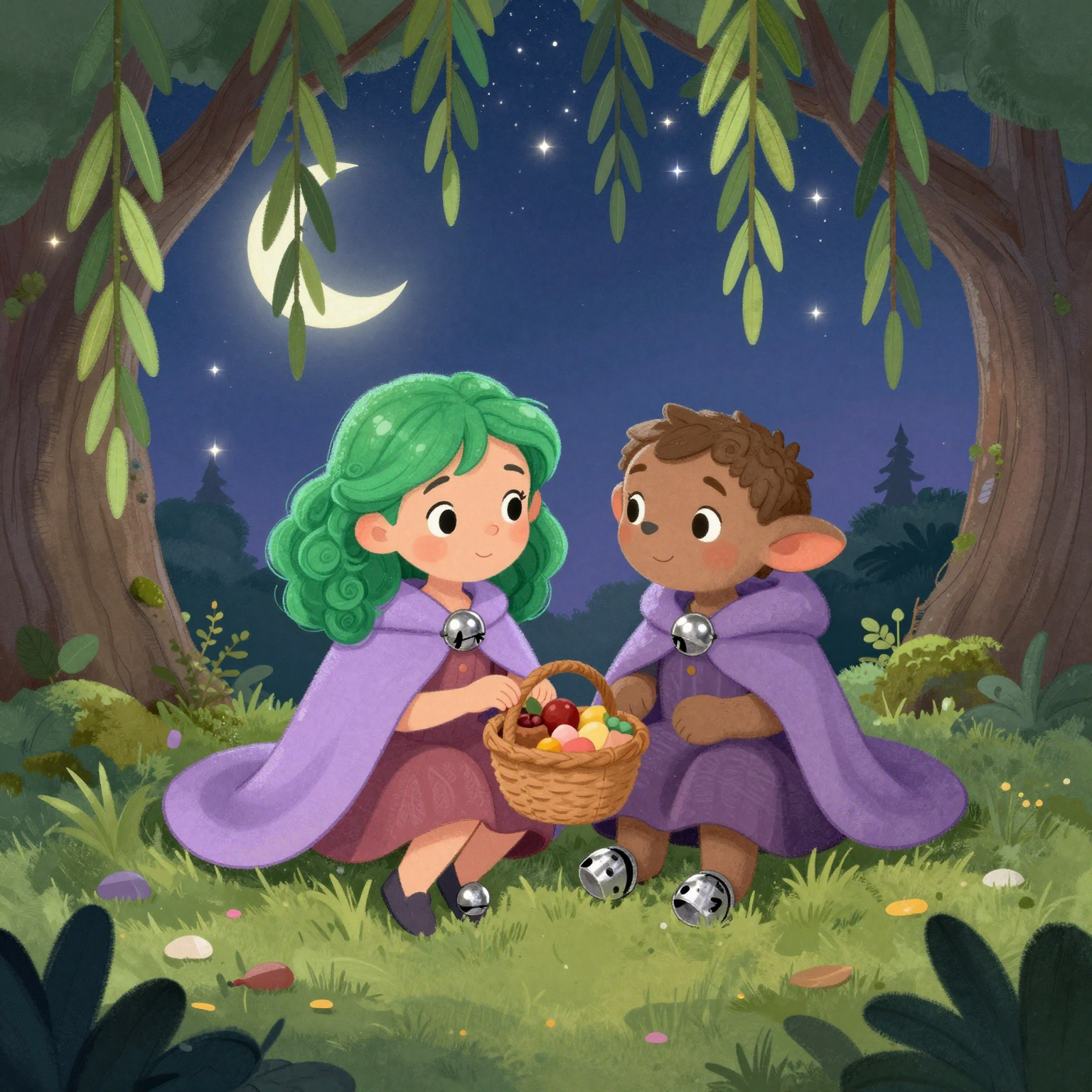
The sun melted, orange and slow, through the willow threads. The contest was done, but Lira’s slippers still jingled—fainter now, softer than the sigh of dusk. Pipkin nestled beside her, leaf crown tilted, munching popcorn acorns from the basket of shared wishes.
The forest hushed, wrapping them in a blanket of petal shadows. Wind stroked the branches, making gentle shushing sounds. Lira swung her feet, slippers brushing the moss in sleepy zigzags—chime, chime, hush, hush—the same pattern she’d made at dawn, but quieter, slower. “Zig, zag, chime-chime—every wish has its time,” she whispered, and this time, Pipkin echoed back, his small voice steady as a pebble plopping in a pond.
As stars blinked awake, the echo shimmered one last time: “Sleep, sleep, sleep—turn to deep.” The moss felt warmer, the basket heavier with dreams, and the air grew sweet, as if the forest itself had tucked them in. In Willowbell Wood, even the smallest whisper was a wish waiting for its answer, drifting through the night on drowsy feet and fading bells.